Optimizing Last-Mile Delivery Across the US: Strategies from Skyline Freight Solutions
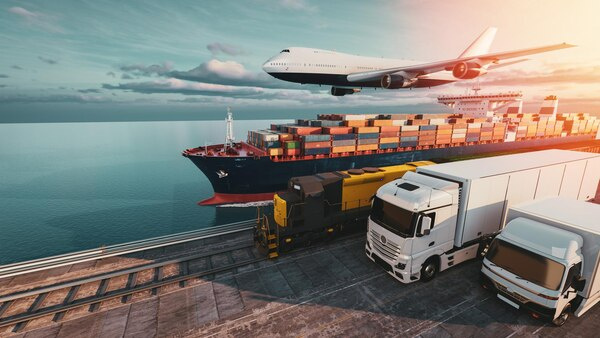
Optimizing last-mile delivery across the United States demands a precise balance of speed, reliability, cost efficiency, and customer satisfaction. For logistics providers like Skyline Freight Solutions, the challenge lies in orchestrating people, processes, and technology across an enormous and diverse geography—dense urban cores, sprawling suburbs, and remote rural communities all with different demands and constraints.
Below are key strategies and practical approaches Skyline Freight Solutions can apply and refine to drive best-in-class last-mile performance nationwide.
1. Network Design and Micro-Fulfillment
Strategic placement of final-mile nodes
A well-designed distribution network is the foundation of efficient last-mile delivery. Rather than relying solely on a few large regional hubs, Skyline Freight Solutions can:
- Deploy micro-fulfillment centers (MFCs) in proximity to major population clusters to shorten the distance to the end customer.
- Use spoke-and-hub models, where large regional DCs (distribution centers) feed satellite depots that handle local sorting and dispatch.
- Leverage shared or 3PL facilities in markets where opening dedicated centers is not yet economical, enabling quick market entry with limited capital investment.
Dynamic territory planning
Static territories often fail to account for changing order densities and traffic patterns. Skyline Freight Solutions can:
- Continuously analyze order heat maps, historical demand, and seasonality to re-balance territories.
- Create flex territories that can expand or contract based on daily volume, reducing bottlenecks in high-demand zones.
- Tailor territory sizes by geography: smaller zones in congested cities; larger but more route-optimized zones in rural and exurban areas.
2. Route Optimization and Dispatch Intelligence
Advanced route planning
Route optimization is no longer just about shortest distance; it must consider real-world constraints:
- Time windows (customer availability, building access, store hours).
- Traffic and congestion patterns, including peak hours and local regulations (e.g., NYC truck routes).
- Vehicle and driver constraints (capacity, shift length, CDL requirements for certain loads).
By adopting modern routing algorithms and tools that use real-time and historical traffic data, Skyline Freight Solutions can:
- Reduce miles driven per stop.
- Increase stops per route without undermining service quality.
- Limit overtime and driver fatigue, which further protects safety and compliance.
Dynamic dispatching
Static morning assignments often underperform in volatile environments. Dynamic dispatch enables:
- Mid-day re-optimization of routes based on urgent orders, cancellations, or unexpected delays.
- Reassigning tasks between drivers in real time to preserve on-time performance.
- Automated exception handling, where the system proposes the best next step when a stop fails (e.g., customer not home, access blocked).
This approach is especially powerful in metropolitan markets where congestion or building access rules can change daily.
3. Smart Mode and Vehicle Mix
Segmenting by service level and geography
A “one-size-fits-all” fleet is costly. Skyline Freight Solutions can reduce costs and improve reliability by segmenting last-mile operations:
- Urban cores:
- Use smaller vans, cargo bikes, or e-vehicles to navigate congestion and limited parking.
- Consolidate deliveries into building- or block-level drops where possible (e.g., lockers, concierge, parcel rooms).
- Suburban and exurban areas:
- Deploy mid-size vans or box trucks that balance capacity with flexibility.
- Optimize for dense routing within residential neighborhoods and retail zones.
- Rural territories:
- Larger routes with fewer stops; align schedules with lower-frequency (but reliable) delivery days.
- Consider regional carrier partnerships where local specialists can deliver more efficiently.
Green and alternative vehicles
Fuel costs and sustainability concerns are shifting fleets across the US:
- Electrification of urban fleets can stabilize operating costs and support environmental commitments, especially in cities with emissions regulations or incentives.
- Hybrid or high-efficiency vehicles on longer suburban routes reduce fuel burn without compromising range.
- Route planning should incorporate charging and refueling constraints to ensure that sustainability and reliability evolve together.
4. Technology-Driven Visibility and Control
End-to-end shipment visibility
Customer expectations for transparency are high. Skyline Freight Solutions can differentiate its service with:
- Real-time tracking via SMS, email, or branded web portals, including live map views where appropriate.
- Accurate estimated time of arrival (ETA) windows that tighten as the delivery window approaches.
- Event-based notifications (out for delivery, next stop, attempted delivery, delivered with proof).
Driver tools and mobile applications
Modern last-mile relies heavily on the quality of the driver’s tools:
- Turn-by-turn navigation with truck-appropriate routing and integration with the TMS (Transportation Management System).
- Digital proof of delivery (POD) including signatures, photos, and geotagging.
- In-app workflows for exception management (e.g., failed delivery attempts, damaged goods, security or access issues).
- Direct communication with dispatch through standardized templates (arrival delays, safety concerns, route blockages) to limit calls and free up dispatch teams.
Well-designed mobile apps reduce mental load on drivers, improve accuracy, and capture data needed for continuous improvement.
5. Data Analytics and Continuous Improvement
Performance measurement
Skyline Freight Solutions can optimize what it measures. Core last-mile KPIs include:
- On-time delivery rate by region, client, and product type.
- Cost per stop and cost per mile, segmented by urban vs. suburban vs. rural.
- First-attempt success rate, especially important for residential deliveries.
- Stops per route / per hour, to gauge route design quality.
- Customer satisfaction scores and complaint types, aligned with operational data.
Root cause analysis and feedback loops
Performance issues are often systemic:
- Analyze clusters of delayed deliveries: are they tied to a specific facility, time window, building type, or carrier partner?
- Study failure modes (e.g., “customer not home,” “incorrect address,” “access issue”) to inform targeted solutions like improved address validation, better instructions collection, or alternative delivery points.
- Use driver input as structured data. A quick post-route survey or event tagging can reveal recurring bottlenecks (e.g., specific buildings with elevator congestion, gated communities, construction zones).
A continuous improvement culture—where data feeds changes in policy, training, and technology—is central to long-term cost and service gains.
6. Customer-Centric Delivery Experience
Flexible delivery options
Customer expectations are highly diverse across the US. Skyline Freight Solutions can raise satisfaction and reduce failed deliveries by offering:
- Time-window selection (evenings, weekends, or narrow windows for high-value or bulky items).
- Alternative delivery locations such as parcel lockers, staffed pickup points, or local partner stores.
- Authority to leave (ATL) options with clear photo proof and designated safe-drop instructions.
Proactive communication and self-service
Transparent communication reduces inbound support and builds trust:
- Provide pre-delivery confirmations and the ability to reschedule or redirect delivery via self-service links.
- Offer real-time status updates with clear explanations when delays occur, not generic “exception” codes.
- Implement branded post-delivery surveys that capture customer feedback at the moment of experience, feeding continuous improvement analysis.
By positioning communication as part of the service—not an afterthought—Skyline Freight Solutions can transform the last mile into a customer touchpoint that strengthens relationships.
7. Partner Ecosystems and Carrier Management
Multi-carrier and regional partnerships
The US is too large and too varied for most providers to cover every ZIP code at equal efficiency. Skyline Freight Solutions can:
- Maintain a multi-carrier strategy, combining its own assets with regional specialists and selected parcel carriers.
- Route shipments based on carrier strengths—for instance, certain partners for dense urban deliveries, others for remote rural coverage.
- Use carrier performance scorecards and APIs to ensure consistent visibility and standardized data across partners.
Unified standards and brand experience
When multiple carriers are used, maintaining a consistent customer experience is crucial:
- Define common SLAs, POD standards, and communication templates across all partners.
- Use an integrated technology layer to unify tracking, notifications, and customer support, so the end customer experiences a single brand, Skyline Freight Solutions, even when a regional carrier executes the final handoff.
- Conduct regular joint reviews with partners, sharing data and best practices to co-improve performance.
8. Operational Excellence and Workforce Strategy
Driver recruitment, training, and retention
In last-mile, drivers are the face of the brand. A strong workforce strategy enables reliability and scalability:
- Structured onboarding for new drivers, covering safety, customer service, technology tools, and specific client requirements.
- Ongoing micro-training modules delivered via driver apps for updates on procedures or new services.
- Competitive and transparent compensation models that align incentives with delivery quality, not just volume.
- Programs to reduce turnover, such as clear progression paths, performance recognition, and feedback channels.
Standardized processes and playbooks
Operational consistency across the US market is vital:
- Develop standard operating procedures (SOPs) for typical and exceptional scenarios (e.g., building access protocols, high-value item handling, returns).
- Maintain market-specific addenda for cities with unique constraints (e.g., loading dock rules in major downtowns, local regulations on idling or curb use).
- Regular audits—physical, digital, and process-based—to ensure SOPs are followed and updated as conditions evolve.
9. Returns, Reverse Logistics, and Value-Added Services
Streamlined reverse logistics
Last-mile doesn’t end at delivery. Returns are a significant cost driver and customer touchpoint:
- Offer scheduled pickup for returns with integrated labels and documentation to minimize driver dwell time.
- Consolidate returns at local depots before backhauling to central facilities, reducing transportation cost per unit.
- Use scannable IDs and automated disposition rules (restock, refurbish, recycle) to speed turnaround and inventory accuracy.
Additional services at the doorstep
For certain sectors—furniture, appliances, B2B equipment—value-added services can be differentiators:
- White-glove delivery, including room-of-choice placement, assembly, or installation.
- Removal of old items and packaging, with smart consolidation for recycling and disposal.
- In B2B contexts, inside delivery, shelf stocking, or equipment swap-outs during regular runs.
These services deepen client relationships and can transform last-mile from a cost center into a revenue-generating service portfolio.
10. Adapting to Regional and Regulatory Diversity
Navigating local regulations
US cities and states impose diverse rules around commercial vehicles, emissions, parking, and labor:
- Maintain a regulatory intelligence function that tracks local requirements and anticipates upcoming policy shifts.
- Adapt operations—vehicle types, delivery hours, loading procedures—to comply without sacrificing reliability.
- Use structured documentation and training so drivers and dispatchers understand area-specific constraints.
Weather and seasonal resilience
From winter storms in the Midwest to hurricanes along the coasts, resilience is a strategic necessity:
- Build seasonal playbooks for each major region, including contingency routes, backup carriers, and communication protocols.
- Pre-stage inventory and capacity ahead of forecasted disruptions, particularly during peak seasons such as Q4 holidays.
- Keep customers and shippers informed with clear, proactive messaging about expected impacts and mitigation efforts.
Conclusion
Optimizing last-mile delivery across the US is a complex, continuously evolving challenge. For Skyline Freight Solutions, success lies in integrating several disciplines:
- Smart network design and micro-fulfillment for geographic reach.
- Sophisticated route optimization and dynamic dispatch for operational efficiency.
- A tailored mode and vehicle mix that reflects diverse urban, suburban, and rural realities.
- Robust technology, analytics, and visibility that drive data-led decision making.
- A customer-centric service model supported by strong carrier partnerships and frontline excellence.
By approaching last-mile as a strategic ecosystem—where physical operations, digital tools, and customer experience are designed together—Skyline Freight Solutions can deliver consistent, scalable, and cost-effective service nationwide, transforming the last mile into a long-term competitive advantage.